Skip Navigation

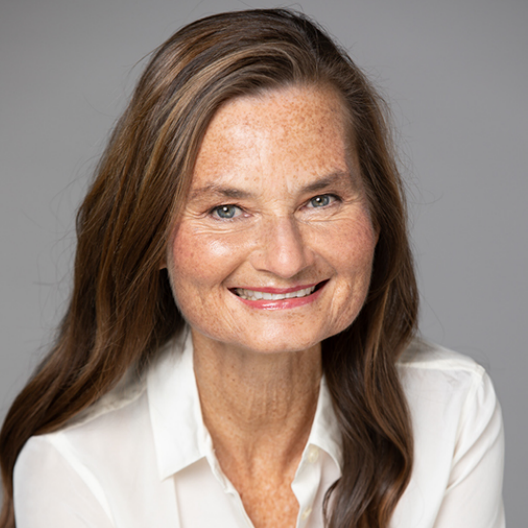
Evelyn Preuss

Evelyn Preuss

Instructor, German

evelyn.preuss@ou.edu
Kaufman Hall 126


Evelyn Preuss received her MPhil from Yale University in May 2021 and joined the University of Oklahoma Department of Modern Languages, Literatures, and Linguistics in the Fall of 2021 as an Instructor of German.

Evelyn is finishing her dissertation on East German Cinema at Yale University. Contrary to Cold War notions of the former Eastern Bloc as a streamlined society characterized by the top-down chain of command, she argues that the GDR’s hybrid institutional framework provided professional support and considerable artistic freedom in addition to distribution. Thereby the GDR fostered, rather than curtailed, alternative political discourses. Analyzing the cinema of the German Democratic Republic's DEFA studios (1946-1992), she shows how production teams could combine aspects of a highly professional studio cinema with auteurist approaches as well as a revolutionary impetus that favored interventionist aesthetics and rehearsed with the audience the attitudes, discursive strategies, and behaviors that eventually led to the 1989 revolution and the Fall of the Wall.

Evelyn's postdoctoral project extends from her doctoral thesis by analyzing the arts, in their grassroots form, as alternative platforms that can provide different forms of inclusion, build different forms of political consensus, and model different forms of social behavior, while, in their commercialized, corporate form, they may advance social stratification, homogenization, and exchangability. By relating cultural expression to political, social, and economic developments, she explores their social dimensions and their respective political effect.

Evelyn teaches German language courses in the MLLL since the fall of 2021.

Website: 
  1. https://yale.academia.edu/EvelynPreuss
  2. https://www.researchgate.net/profile/Evelyn-Preuss

  1. “Goodbye, Sonnenallee, Or How Gundermann Got Lost in the Cinema of Others,”
    Politics and Culture in Germany and Austria Today; Edinburgh German Yearbook 14.
    Edinburgh: Edinburgh University Press, 2021: 183-206.
  2. This chapter investigates to what extent an increasingly globalized market place allows for the local production of meaning is.
    It takes as an example the biopic Gundermann, a film about East Germany's arguably most idiosyncratic intellectual,
    Gerhard Gundermann. In the chapter, Evelyn shows how, after fighting for funding for twelve years, the last East German director
    still working for mainstream German Cinema, Andreas Dresen, had to compromise his original intent and Gundermann's life,
    art, and politics in order to fit the film within the formulae of global cinema.
    https://www.academia.edu/38327790/_You_Say_You_Want_a_Revolution_East_German_Film_at_the_Crossroads_
    between_the_Cinemas_Celluloid_Revolt_German_Screen_Cultures_and_the_Long_1968_Edited_by_Christina_
    Gerhardt_and_Marco_Abel_Rochester_NY_Boydell_2019_218_236


  3. “You Say You Want a Revolution: East German Film at the Crossroads between the Cinemas.” Celluloid Revolt: 1968
    and German Cinema. Rochester, NY: Camden House, 2019.
  4. This chapter shows that East German Cinema hybridized what Western Film Theory terms First, Second, and Third Cinema.
    It functioned as a monopolistic studio system that professionalized the cinematic arts, while giving artists license to
    develop their own projects. It also subscribed to a revolutionary agenda that sought to intervene in social and political process. https://www.academia.edu/38327790/_You_Say_You_Want_a_Revolution_East_German_Film_at_the_Crossroads
    _between_the_Cinemas_Celluloid_Revolt_German_Screen_Cultures_and_the_Long_1968_Edited_by_Christina_
    Gerhardt_and_Marco_Abel_Rochester_NY_Boydell_2019_218_236

  5. “Europe (Un)Divided: How Peace Was Won and the War Never Lost in Wim Wender's Lisbon Story (1995) and
    Emir Kusturica's Bila Jednom Jedna Zemlja/Underground (1995).” Journal of Contemporary European Studies 1 (2007): 47-54.
  6. This article compares Eastern and Western perspectives on European integration through the films of Wim Wenders and
    Emir Kusturica, and shows how the filmmakers communicate their different understanding and experiences
    through their filmic aesthetics. https://www.academia.edu/17825205/_Europe_Un_Divided_How_Peace_Was_Won_and_the_War_Never_
    Lost_in_Wim_Wenders_Lisbon_Story_1995_and_Emir_Kusturicas_Bila_Jednom_Jedna_Zemlja_Underground_
    1995_Journal_of_Contemporary_European_Studies_1_2007_47_54
  7. “To See or Not to See? Topographies of Repression in Konrad Wolf’s I Was Nineteen (1968) and The Naked Man
    on the Sportsground (1974).” Reviewing Space: Space and Place in European Cinema. Eds. Wendy Everett and
    Axel Goodbody. New York: Lang, 2005: 209-240.
  8. This chapter reads Konrad Wolf's films--and especially their landscapes--as anamorphic picture puzzles, which reveal
    or hide histories, politics, and trajectories depending the (historical) perspective of the spectators. https://www.academia.edu/35309062/_To_See_or_Not_to_See_Topographies_of_Repression_in_Konrad_Wolf_s_I_
    Was_Nineteen_1968_and_The_Naked_Man_on_the_Sportsground_1974_Reviewing_Space_Space_and_Place_
    in_European_Cinema_Eds_Wendy_Everett_et_al_New_York_Lang_2005_209_240

  9. “The Wall You Will Never Know.” Perspecta 036: The Yale Architectural Journal. Eds. Jennifer Silbert and
    Sidney McCleary. Cambridge, MA: MIT Press, 2005: 19-31.
  10. This article analyzes Cold War ideology by way of the period's most notorious architecture: the Berlin Wall.
    Reading the Wall in terms of Film Theory, namely a projection screen, the Cold War divide emerges as a monument
    to (post)modernity rather an atavistic attempt to forestall it.
    https://www.academia.edu/17812963/_The_Wall_You_Will_Never_KnowPerspecta_036_The_Yale_Architectural_
    Journal_Eds_Jennifer_Silbert_and_Sidney_McCleary_Cambridge_MA_MIT_Press_2005_19_31


  1. MPhil in German Languages and Literatures. Yale University. 2021
  2. MA in German Languages and Literatures. Yale University. 2004
  3. MA in German Studies. University of Iowa. 1997