

The Newman Prize for Chinese Literature is awarded biennially in recognition of outstanding achievement in prose or poetry that best captures the human condition, and is conferred solely on the basis of literary merit.
About the Newman Prize:
The Newman Prize for Chinese Literature is part of the Institute for US-China Issues mission to advance mutual trust in US-China relations. Literature and other cultural products can promote understanding through their celebration of our common humanity. The Newman Prize honors Harold J. and Ruth Newman, whose generous endowment for a chair at the University of Oklahoma enabled the creation of the OU Institute for US-China Issues.
We are excited to announce the Finalists for the 2027 Newman Prize for Chinese Literature!
The University of Oklahoma Institute for US-China Issues has announced five finalists for the 2027 Newman Prize for Chinese Literature, one of the leading international awards devoted exclusively to Chinese-language literature.
The five finalists for the 2027 prize are:
Fang Fang 方方: Nominated by Michael Berry, University of California, Los Angeles
Su Tong 苏童: Nominated by Wang Yao 王尧, Soochow University
Wu Ming-Yi 吳明益: Nominated by Darryl Sterk 石岱崙, Lingnan University
Priest: Nominated by Heather Inwood, University of Cambridge
Zhang Yueran 张悦然: Nominated by Dylan Levi King
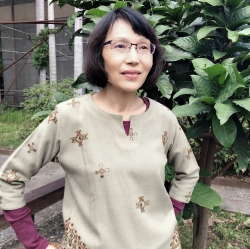
An international jury has selected Taiwanese poet Ling Yü 零⾬ (Wang Meiqin 王美琴) as the winner of the 2025 Newman Prize for Chinese Literature. Sponsored by the University of Oklahoma Institute for US-China Issues in the David L. Boren School of International Studies, the Newman Prize is awarded biennially to recognize outstanding achievement in prose or poetry that best captures the human condition, based solely on literary merit. Any living author writing in Chinese is eligible.
Ling Yü will receive $10,000 and an engraved bronze medallion. She will be celebrated at an award symposium and banquet to be held on the OU Norman campus during the last week of March 2025 along with the winners of the International Newman Prizes for English Jueju.
Ling Yü was nominated for the prize by Professor Cosima Bruno (SOAS London), who praised her poetry for its “untrammeled, ingenious lyricism” and its ability to weave contemporary themes and personal experiences with the controlled elegance of classical Chinese poetry.
"Ling Yü’s language is economical and concise, yet surprising and reverberating with complex meaning. Her poetry engages thoughtfully with classical and modern, Eastern and Western literary, philosophical, artistic, and esoteric sources, generating outstanding works that require attention but are also intuitively grasped. Through her works, readers encounter a prism of rich, elegantly employed references that span themes of meditation, travel, feminism, capitalism, the environment, mythology and more.”
– Professor Cosima Bruno
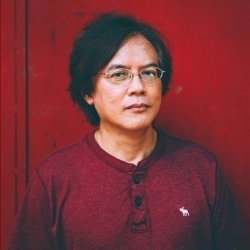
An international jury has selected the Sinophone novelist Chang Kuei-hsing (張貴興) as the winner of the eighth Newman Prize for Chinese Literature.
Sponsored by the Institute for US-China Issues, the Newman Prize is awarded biennially in recognition of outstanding achievement in prose or poetry that best captures the human condition, and is conferred solely on the basis of literary merit. Any living author writing in Chinese is eligible. A jury of five distinguished literary experts nominated the seven poets last spring and selected the winner in a transparent voting process on Oct. 26, 2022.
“The uniqueness of Chang’s writing lies in its fusion of literary aesthetics and narrative styles from the East and the West: his portrayal of the plantations in Borneo reads like a transplant of Faulkner’s American South to the Indonesia Archipelago, and his stream of consciousness style narrative traversing between the character’s psychic and the tropical rainforest terrain inject Chinese literature with a unique sensorial experience similar to that of Gabriel García Márquez’s magical realism. In a sense, it is not at all far-fetched to claim that Chang’s writing can be read as a unique branch of Chinese literature as world literature.”
– E.K. Tan (Stony Brook University), Chang Kuei-hsing's nominator
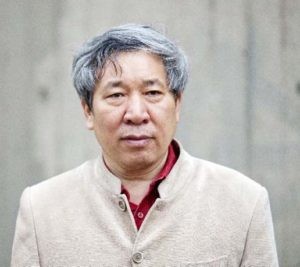
“Yan’s writing does for the Chinese heartland what John Steinbeck did for the American West, or Thomas Hardy for Southwest England…he remains vitally invested in the ethical responsibility of the author. Though it has been demonstrated to him again and again that his explorations of China’s historical trauma are not welcome, he seems not to take the hint, and persists in laying bare what he sees as the original sins of modern Chinese society…His stubbornness, and the perpetual freshness of his sorrow over historical tragedy, are worthy of respect.”
– Eric Abrahamsen, Yan Lianke's nominator (Paper Republic)
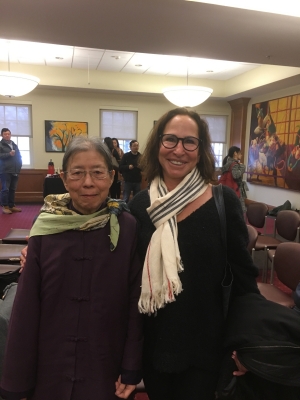
"Hong Kong literature has for too long been relegated to a secondary position, or even worse — it is as though the city is incapable of producing significant literary works and writers of note. Hong Kong poetry is to many perhaps an even more abstract and chimerical concept. Xi Xi’s poetry, at times whimsical and at times serious, speaks to the character of the city and its people. Her poems also demonstrate how stories of a city can be told through narratives that are at first glance insignificant, allegories and fairy tales instead of grand statements. Feminine, tender, witty, observant, and capable of tugging at the heartstrings, Xi Xi’s poetry reminds us Hong Kong poetry should not be ignored in any discussion."
– Dr. Tammy Lai-Ming Ho, Xi Xi’s nominator (Hong Kong Baptist University)
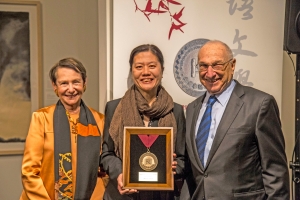
“Over the past thirty or more years, Wang Anyi has continuously transformed her writing and altered her literary directions to produce a spectacular array of works, through which she has created a sort of reality of Chinese-language literature, a city in literature, or even a nation in literature.”
– Dai Jinhua, Wang Anyi’s nominator (戴锦华, Peking University)
Wang won for her novel Reality and Fiction which, according to her nominator Dai Jinhua, is a work that represents “one means of creating the world”: “It is not only literary writing, but also mega-writing of literature. It is a majestic experiment of literature and genre, and a demonstration and substantiation of theory: from the family to the nation-state, and from literary imagination to the history of ‘imagined community.’”
Wang Anyi (b. 1954) was born in Nanjing, Jiangsu Province and grew up in Shanghai. Like her mother, writer Ru Zhijuan (1925–1998), Ms. Wang pursued a literary career and in the early 1980s emerged on the Chinese literary scene. Wang is prolific and innovative: she writes consistently about the history intimately intertwined with her personal memories, and she writes profusely about Shanghai. David Der-wei Wang regards Wang Anyi as the successor of haipai (Shanghai-style) literature after the stellar Eileen Chang (张爱玲).
Wang’s seminal works are exclusively narratives of Shanghai. Her novel Song of Everlasting Sorrow (Changhenge, 1996) won the Fifth Mao Dun Literature Prize and has been translated into many languages. Her other award-winning novels include Reality and Fiction (Jishi yu xugou, 1993), Fuping (2000), Fierce Heroes Everywhere (Biandi xiaoxiong, 2005), The Age of Enlightenment (Qimeng Shidai, 2007), and Scent of Heaven (Tianxiang, 2011).
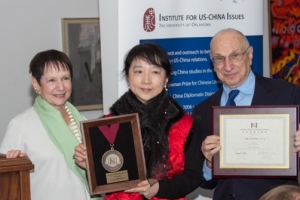
"As a writer of short fiction, Chu is prodigiously talented. Texture, fragrance, color, and taste leap out from her uncommonly crafted prose with such force that they suck the reader into the text in ways not usually associated with the short-story form — a genre which is supposedly too fleeting to be immersive. Chu T’ien-wen’s writing refutes this received wisdom. This is partly because Fin-de-siecle Splendor pays homage to Taipei, the city of Chu’s birth, over eight fluidly conjoined tales which speak to each other as much as they live vividly in their own right. Yet it also because of her flair for carving crystal-cut literary moments, in which the constituent elements of a scene — air, light, mood, character — are each summoned up so precisely that they coalesce into a tableau that sears itself on the reader’s eye.”
– Margaret Hillenbrand, Chu T'ien-wen's nominator (Oxford University)
Chu T’ien-wen was awarded for her short story collection Fin-de-Siecle Splendor. Rooted in the vibrant particulars of Taiwan, her short stories reveal how and why short fiction may be the genre most suited for our times.
Chu was born in 1956 Taipei into one of Taiwan’s most prominent literary families. Her writing career began in the mid-1970s, with whimsical and sentimental pieces that led critics to dub her a latterday acolyte of Eileen Chang. Her literary stock rose steadily throughout the 1980s, boosted by the appearance of harder-hitting works such as Yanxia zhi du (City of Hot Summer, 1987), until the publication of Shijimo de huali (Fin-de-siècleSplendor) in 1990 caused it to soar rather more spectacularly. Fin-de-siècle Splendor was her breakthrough work, trading romanticism for decadence, and crafting a full-blown, mature style that melds classical grace with street slang, and bears the imprints of Taiwan’s fraught linguistic past. That style found its apotheosis in Chu’s award-winning novel Huangren shouji (Notes of a Desolate Man, 1994).
After a period of literary reclusion, Chu reinvented herself again in 2007 with Wuyan (Words of a Witch), a work which probes still more insistently into the nature of writing itself. Chu T’ien-wen’s career as a screenwriter has been no less illustrious. Her collaborations with Hou Hsiao-hsien have yielded many of the landmark films – from Beiqing chengshi (City of Sadness, 1988) through Ximeng rensheng (The Puppetmaster, 1993) to Qianxi manbo (Millennium Mambo, 2001), and several more besides — which helped to turn Taiwan’s New Cinema movement into a global brand.
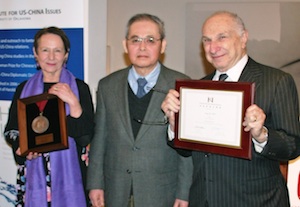
“Yang Mu is an innovator, a supreme craftsman. His deep engagement in world literature, cultures, and history has given his work a versatility and profundity that is unparalleled among Chinese poets today, perhaps even in the entire history of modern Chinese poetry. He has created a language that is densely lyrical and charged with a diction that runs the spectrum from the colloquial to the archaic, a syntax that is supple and complex, and a tone that ranges from playfulness to passion, and to despair. He moves easily from the world of tangibles to the world of abstraction, with images rich and precise. His poetic world is cosmopolitan and global on the one hand, and decidedly native and local on the other. Some of his most powerful poems reveal an unwavering love for and identity with Taiwan. . . . The reader thinks with him, inside the poem and inside his mind and emotions, and emerges more aware of the world and what it means to be human.”
– Michelle Yeh, Yang Mu's nominator (University of California at Davis)
Born in 1940 in Hualian on the east coast of Taiwan, Yang Mu has produced an extraordinary corpus of poetry and prose over the past five decades. After graduating from college, he earned an MFA from the University of Iowa and went on to earn a PhD in comparative literature from the University of California at Berkeley. He has taught at the University of Washington in Seattle for many years, and as a visiting professor at Princeton and National Taiwan University, among others. He has also served as the dean of humanities at National Dong Hwa University in his hometown Hualian, and as the founding director of the Institute of Literature and Philosophy at Academia Sinica, Taiwan.
Yang Mu started writing poetry in 1956 and has published 14 original books of poetry to date, most of which are gathered in the three volume Collected Works of Yang Mu.
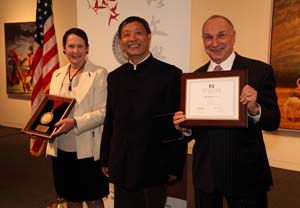
“Han Shaogong is a Chinese writer who intertwines, with exceptional artistry and originality, human perspectives of the local and the global, and whose career exemplifies the creative revolution that has taken place in Chinese writing since 1976. Blending fiction, memoir and essay, A Dictionary of Maqiao is an astonishing book: for the humour and humanity of its story-telling; for its unsentimental dedication to recounting the lives of impoverished farmers; for the light-handed skill with which it narrates the tragedies of modern China; and for its experimental form and sophisticated insights into Chinese culture, language and society.”
– Julia Lovell, Han Shaogong's nominator (University of London)
Born in 1953 in Hunan, south China, Han Shaogong has produced an extraordinary corpus of literary work over the past three decades. After spending six years planting rice and tea in northern Hunan during the Cultural Revolution, in the late 1970s he began a second career as a novelist. In the 1980s, he became a leading member of the “Roots-Seeking Movement” — a pioneering group of writers committed to exploring the fantastical local roots of Chinese culture, and to creating a darkly modernist type of fiction capable of articulating the macabre violence of Maoism.
A decade later, Han’s fascination with south China and with the political calamities of the 20th century culminated in his 1996 masterpiece, A Dictionary of Maqiao: a fictional biography of the village to which Han was sent down during the Cultural Revolution. He was nominated by the prominent translator and scholar Julia Lovell, whose translation of A Dictionary was published in 2003 by Columbia University Press.
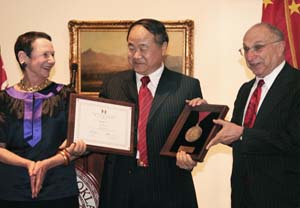
“Of all the facets of Mo Yan’s oeuvre that have made him one of China’s foremost novelists and an internationally renowned figure — from diverse writing styles to his remarkable imagery and brilliant use of language — for me it is his historical imagination, an ability to create an alternative human history, that sets him apart from his peers. Artistry and humanity blend seamlessly in novels and stories that will be read and enjoyed well into the future."
– Howard Goldblatt, Mo Yan's nominator (University of Notre Dame)
Mo Yan has had a remarkable career producing a brilliant corpus of literary work. He was nominated by the prominent translator Howard Goldblatt, who also translated Mo Yan’s latest and winning novel, Life and Death Are Wearing Me Out
| Year | Judging panel | Author | Work |
|---|---|---|---|
| 1st 2009 |
|||
|
|||
| Mo Yan | Life and Death Are Wearing Me Out (生死疲劳) | ||
| Yan Lianke | Dream of Ding Village (丁庄梦) | ||
| Jin Yong | The Deer and the Cauldron (鹿鼎记) | ||
| Wang Anyi | The Song of Everlasting Sorrow (长恨歌) | ||
| Chu T’ien-hsin | The Old Capital (古都) | ||
| Wang Meng | The Transformer (活动变人形) | ||
| Ning Ken | The City of Masks (蒙面之城) | ||
| 2nd 2011 |
|||
|
|||
|
A Dictionary of Maqiao (马桥词典) |
||
| Yu Hua | Chronicle of a Blood Merchant (许三观卖血记) | ||
| Li Ang | The Lost Garden (迷園) | ||
| Ge Fei | Peach Blossom Beauty (人面桃花) | ||
| Su Tong | The Boat to Redemption (河岸) | ||
| 3rd 2013 (Poetry Year) |
|||
|
|||
|
Diaspsis Patelliformi (介殼蟲) |
||
| Hsia Yu | |||
| Yang Lian | |||
| Zhai Yongming | |||
| Ouyang Jianghe | |||
| 4th 2015 |
|||
|
|||
|
Fin-de-Siècle Splendor (世紀末的華麗) |
||
| Yan Lianke | Lenin’s Kisses (受活) | ||
| Yu Hua | The Seventh Day (第七天) | ||
| Ge Fei | Peach Blossom Beauty (人面桃花) | ||
| Chang Kui-hsing | The Herd of Elephants (群象) | ||
| 5th 2017 |
|||
|
|||
|
Reality and Fiction (纪实与虚构) |
||
| Yu Hua | Leaving Home at Eighteen (十八岁出门远行) | ||
| Jia Pingwa | Ruined City (废都) | ||
| Wu He | Remains of Life (餘生) | ||
| Yan Lianke | Lenin's Kisses (受活) | ||
| 6th 2019 |
|
Xi Xi |
|
| 7th 2021 |
|||
|
|||
|
|||
8th 2023 |
|
|
