NEWS


TULSA, OKLA. – James J. Sluss, Jr., a professor in the University of Oklahoma Gallogly College of Engineering, has been named a Fellow of the Institute of Electrical and Electronics Engineers for his contributions to advancing global engineering education through entrepreneurship and professional development.
The grade of Fellow is conferred upon IEEE Senior Members with outstanding records of accomplishments in any of the IEEE fields of interest. Each year, this honor is limited to no more than 0.1% of the total IEEE voting membership. Fellow is the highest grade of IEEE membership and is recognized as a prestigious honor and a significant career achievement.
"It’s no surprise that Jim Sluss has been named an IEEE Fellow. With over 30 years of notable college and university leadership and service, including director of the School of Electrical and Computer Engineering, he has made a lasting impact on this vital discipline," said John Klier, Ph.D., dean of the Gallogly College of Engineering.
Sluss has previously served in several roles throughout the university, including as interim president of the OU-Tulsa campus, associate vice president for academic affairs and dean for the OU-Tulsa Graduate College, and director and Morris R. Pitman Professor of the School of Electrical and Computer Engineering on the OU Norman campus.
The IEEE is the world's leading professional organization dedicated to advancing technology for the benefit of humanity. With over 460,000 members in more than 190 countries, IEEE is a leading authority in a wide range of areas, including electrical and computer sciences, engineering, and related disciplines. Learn more at ieee.org.
About the University of Oklahoma
Founded in 1890, the University of Oklahoma is a public research university located in Norman, Oklahoma. As the state’s flagship university, OU serves the educational, cultural, economic and health care needs of the state, region and nation. For more information about the university, visit www.ou.edu.
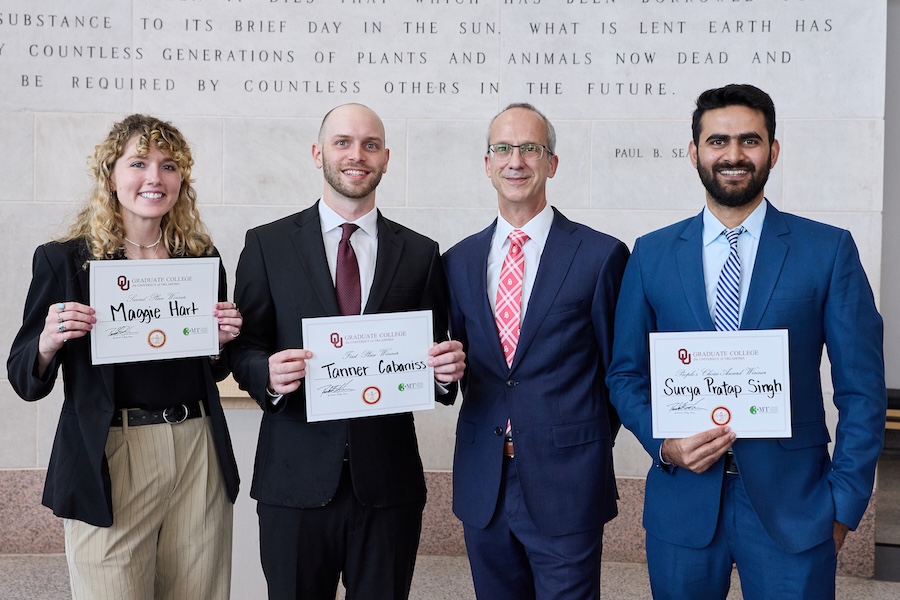
Three University of Oklahoma graduate students have been named winners of the 2025 Three Minute Thesis competition, which challenges participants to explain their research in three minutes to a non-specialist audience.
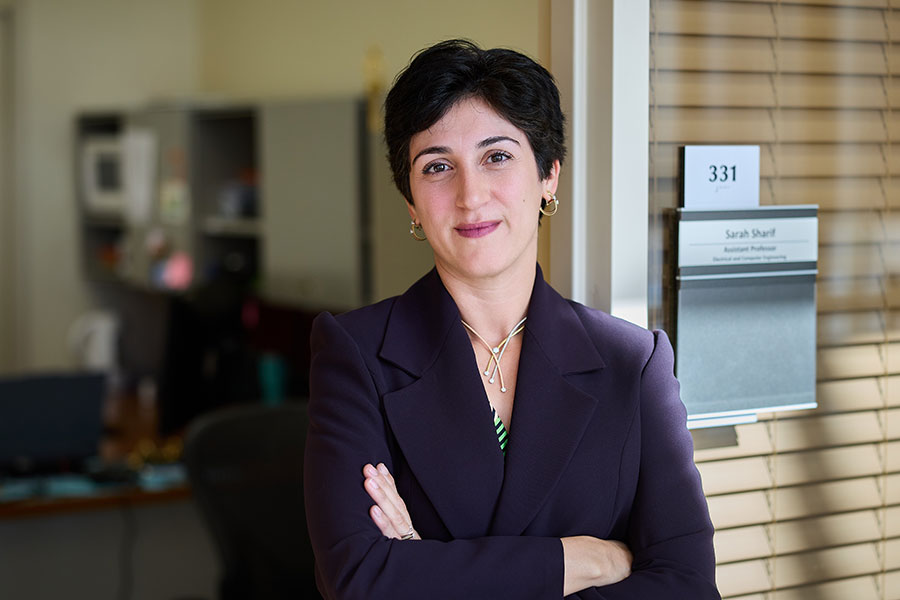
Sarah Sharif, a researcher with the University of Oklahoma, has been awarded funding from the U.S. Department of Defense (DoD) to create innovative light detectors that pick up mid-wave and long-wave infrared signals at higher temperatures than previously considered achievable.
A team from OU and WVU recently earned a five-year, $3.5 million grant from the National Institutes of Health to study how concept cigarillos influence the potential for addiction. The results will be used to inform the FDA’s impending flavor ban on cigar products and could have wider-reaching implications for other tobacco products that come in flavors, such as e-cigarettes and tobacco-free nicotine pouches.